
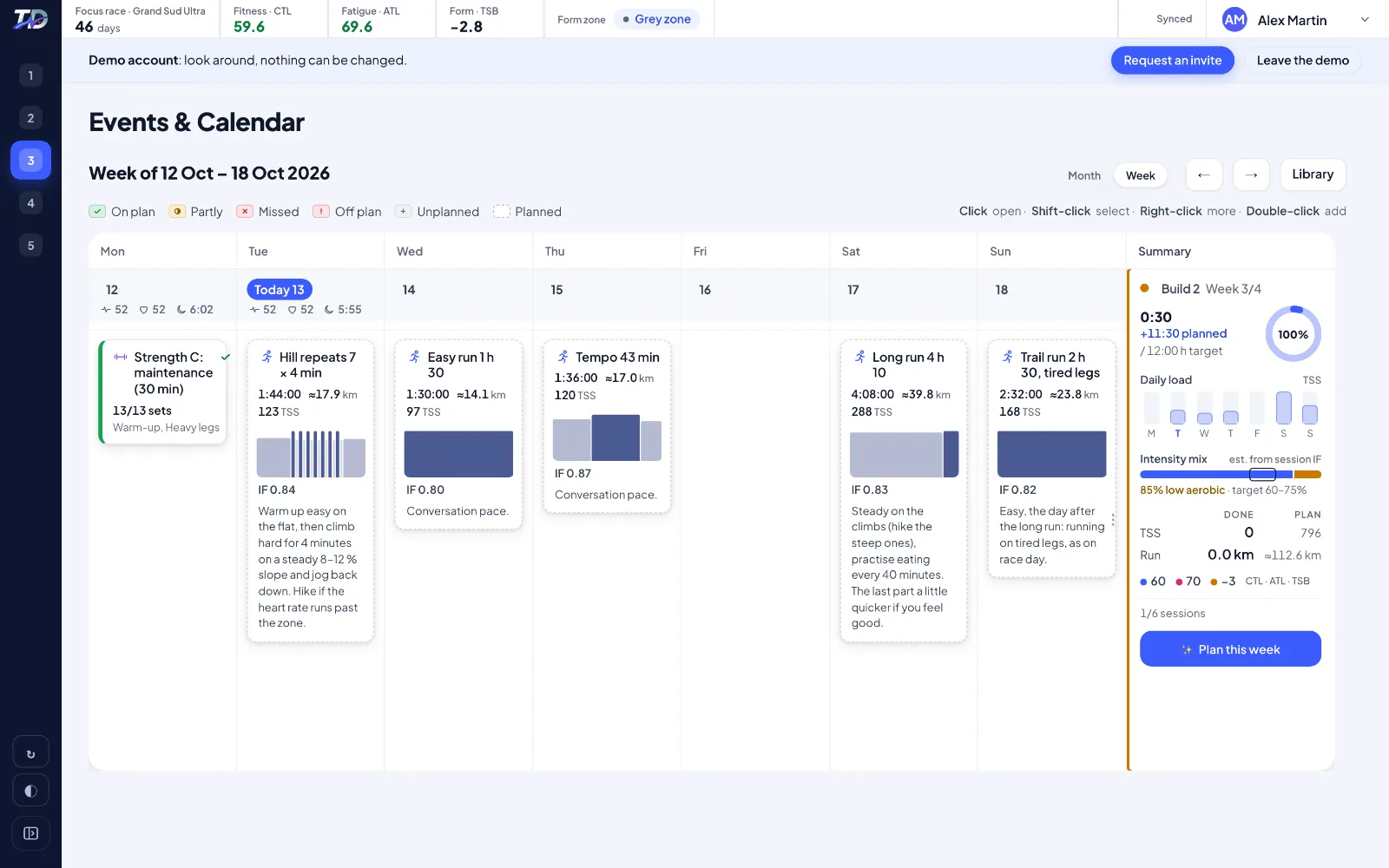
Each morning, next to the day
Every day in the calendar carries a line with that morning's HRV, resting heart rate and sleep. No separate health page to remember to open: the numbers are where you decide what to do today.
Thu 9
HRV 64 RHR 46 7 h 40
Hills 6 × 4 min
Fri 10
HRV 51 RHR 50 5 h 50
Run 40 min easy
Sat 11
HRV 60 RHR 47 8 h 10
Long run 3 h 30
Compared with your own usual
An HRV of 50 means little on its own: it can be normal for one athlete and a bad night for another. MyTrainingDesk compares your week with your own usual from the four weeks before, and flags it when it drops more than 10 % under. One low morning is noise; a week below is worth acting on.
The coach reads it before it plans
Ask "should I train hard today?" and the coach checks your HRV, resting heart rate and sleep against your last week and your last four, along with your form and how your recent load compares with your fitness. When it plans a week, it says which session it eased and why, and what it will add back once you've recovered.
Should I do the hill repeats today?
Not today. HRV has been under your usual for three mornings, resting heart rate is 4 beats up and you slept 5 h 50. Your legs had a big week.
Run 40 minutes easy instead. I've moved the hills to Sunday and shortened Saturday's long run by 30 minutes.
Fitness, fatigue and form
The load side of recovery: your fitness (the training load of the last six weeks), your fatigue (the last week) and your form, the difference between them. With the share of your training in each intensity band and how much of the plan you completed, you see whether the load is building, holding or too much.